Everything between the boathouse and the start line
RiggerPlus covers the four jobs an equipment manager actually does before a regatta: keep the fleet and trailers measured, load the trailer so it fits and tows safely, pick a route the rig can drive, and get drivers and athletes the same plan on the day.
Fleet & assets
A fleet record with the numbers that matter for towing
Boats sync from Boathouse Connect; hull-class defaults supply length, beam, rigged width and weight for every shell type (1x through 8+), so you only override what is unusual about a particular boat. Trailers are described rack by rack, post by post — because that is what decides whether a load fits.
- Boats: hull class, dimensions, rigged/de-rigged widths, weight, and which club owns them.
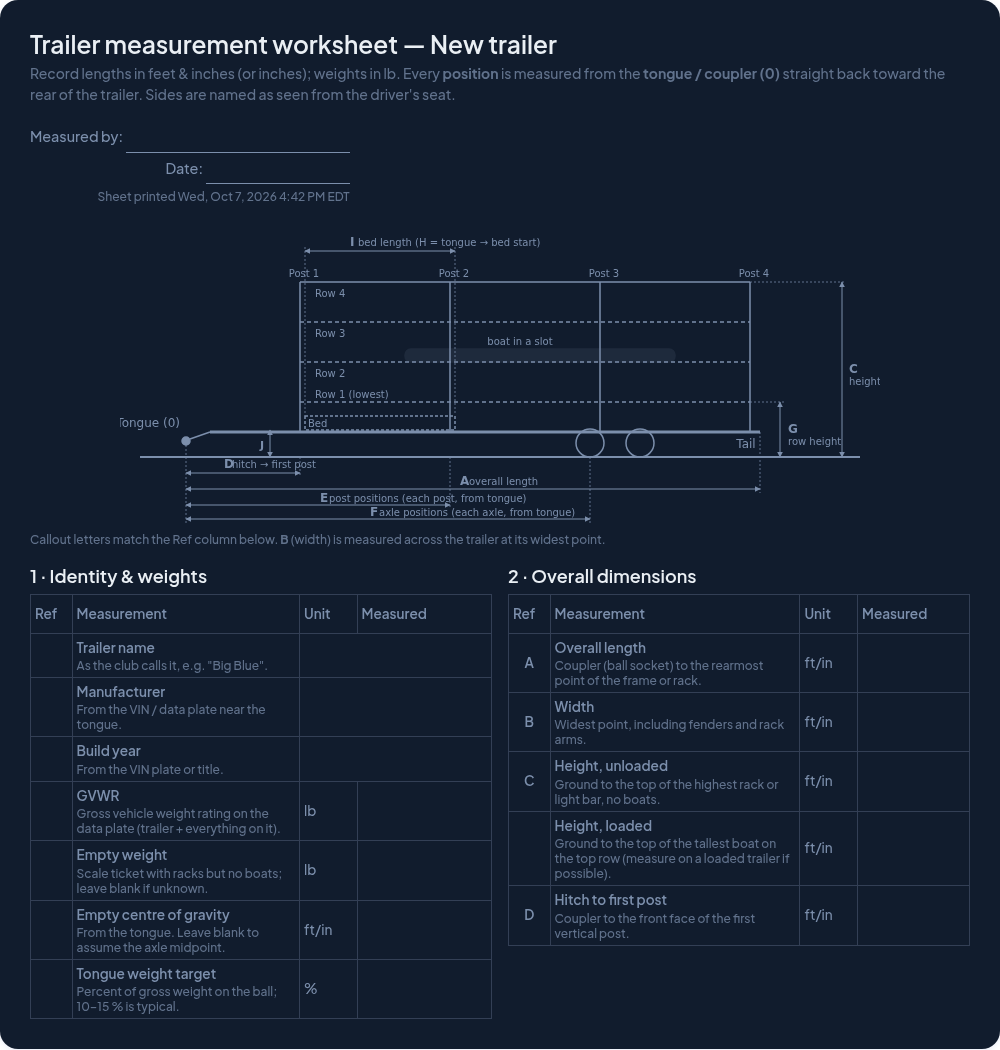
- Trailers: rows, racks per side, posts, blockages, axles, tongue and bed geometry; start from a common trailer template and adjust.
- Tow vehicles: cab height, length, weight, fuel range — the truck profile every route is planned against.
- Riggers, oars and other items: weighted cargo that counts toward the load, not an afterthought.
- Imperial or metric per club, everywhere numbers are shown or printed.
Load planning
Load the trailer on screen, with the rules of the boathouse built in
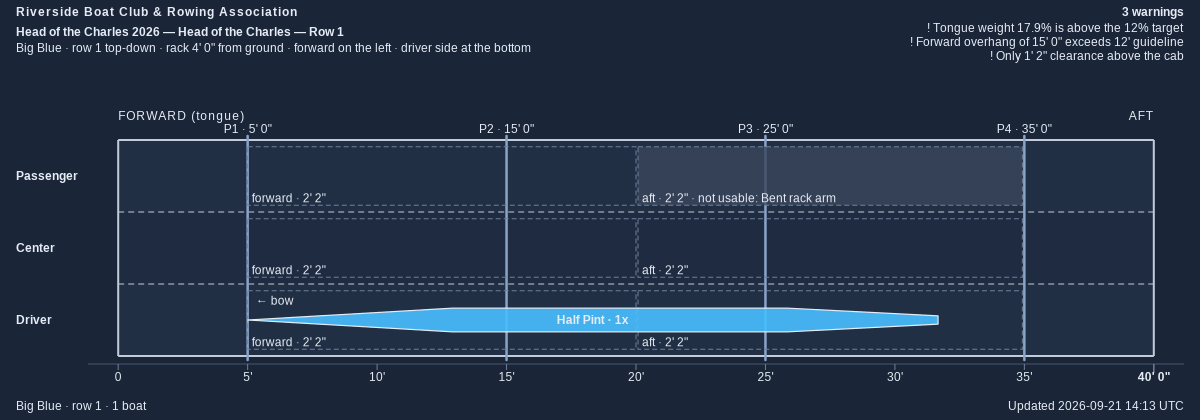
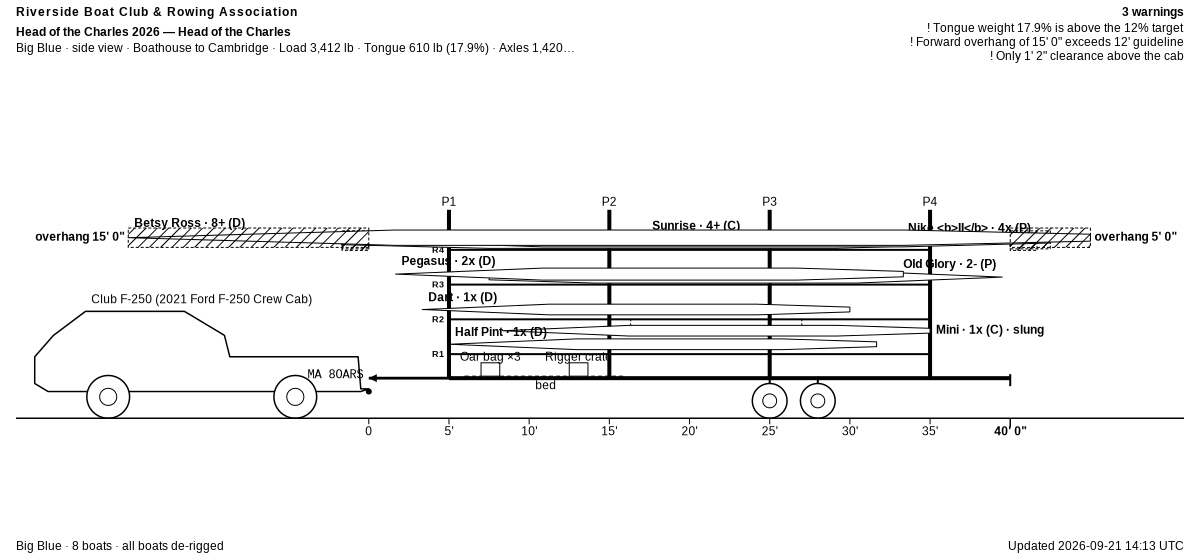
Place each boat on a rack and RiggerPlus checks it the way an experienced rigger would — then draws the result so the loading crew sees exactly where each hull goes.
- Fit checks: gunwale-to-gunwale collisions on a shared rack, forward and aft overhang, clearance above the cab, boats nested side by side.
- Support & tipping: every hull needs posts under it; deck-only support and narrow post spread are flagged on the drawing.
- Towing physics: total load, tongue weight as a share of the load, per-axle weights.
- Carry-forward between legs: boats stay put from stop to stop; drop one at the regatta or move one for the ride home and only that leg changes.
- Diagrams: side view plus a top-down drawing per row (driver side at the bottom, US style), as SVG or PNG, dark for the screen or black-and-white for print.
Route planning
Routes a truck and a 40-foot trailer can actually drive
Plan route asks TomTom for truck routes using your rig’s height, length and weight, fetches alternatives for every leg, and scores each one on the things that go wrong when towing boats — not just the fastest ETA.
- Towing-constraint scoring: fuel gaps longer than the truck’s range, legs with no lodging at the end of the day, missing diesel, tolls and ferries, provider warnings; rest areas and truck parking earn credit.
- Per-leg alternatives: see the options for each leg on the map with their road numbers, and override the recommendation leg by leg.
- Stops along the way: fuel, truck stops and hotels found along the route and dropped into the itinerary as real stops.
- Multi-day schedule: driving-hour limits, breaks and overnights; a planned departure on the regatta stop puts the leg home on the right day.
- Pickups and drop-offs: add an address as a stop and the legs, load plan and route rebuild around it.
Leg 1 · Boathouse → Regatta
Recommended| Option | Roads | Drive | Longest fuel gap | Tolls | Score |
|---|---|---|---|---|---|
| A | I-84 · I-91 | 6 h 05 | 142 mi | 0 mi | 365 |
| B | I-95 · I-91 | 5 h 50 | 138 mi | 48 mi | 440 |
| C | US-7 · I-90 | 6 h 40 | 211 mi | 12 mi | 612 |
- Option C: 211 mi between diesel stops exceeds the F-250’s 180 mi towing range
- Option B: 48 mi of tolls
- Option A: 3 rest areas with truck parking
Illustration of the per-leg option list; scores are drive minutes plus penalties.
Trip day
One plan for the team, one link for each driver
Nothing to install. The team gets a public itinerary and load diagrams on the club’s branded page; each driver gets a private link that follows the trailer through the day.
- Driver link: today’s legs, the current leg’s load diagram and inventory checklist, one-tap Arrived / Departed and Loaded / Unloaded (with undo), and a black-and-white print button.
- Public load diagram page: a shareable URL per trip with the club logo, every leg’s side view and row diagrams, and SVG/PNG downloads.
- Trip editors: grant a coach or co-planner edit access to a single trip without club-wide rights.
- Several trailers per trip, each with its own tow vehicle, driver and phone number — change the truck later without redoing the load.
- Dashboard: upcoming regattas from Boathouse Connect with their trips, and the history of past ones.
Big Blue · Club F-250 · Sam
- Regatta siteDep 1:05 PM
- Pilot, SturbridgeETA 3:20 PM
- BoathouseETA 7:10 PM
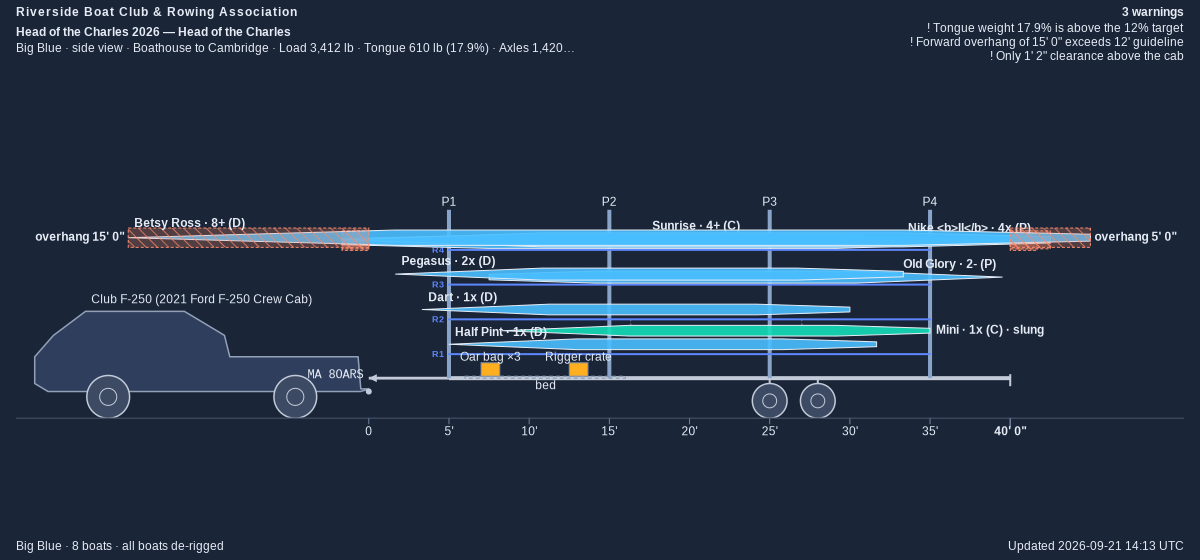
Illustration of the driver link on a phone.
See it with your own trailer
Sign in with your Boathouse Connect account, or ask for a walkthrough and we will load your fleet with you.